Forest Resilience Strategy | Fundació RESPIR
June 2026 – October 2026
Fundació ResPIR


RETURN has supported Fundació RESPIR in designing a strategy to strengthen the forest resilience strategy for Fundació RESPIR in the face of climate change. The project has helped transform an initial idea around the forest bioeconomy into a value proposition. It has also defined a mission and a 2026–2027 roadmap to turn the Santa Magdalena estate, in Cerdanya, into a testing ground for forest resilience.
The challenge: strengthening the resilience of the Pyrenees’ forests
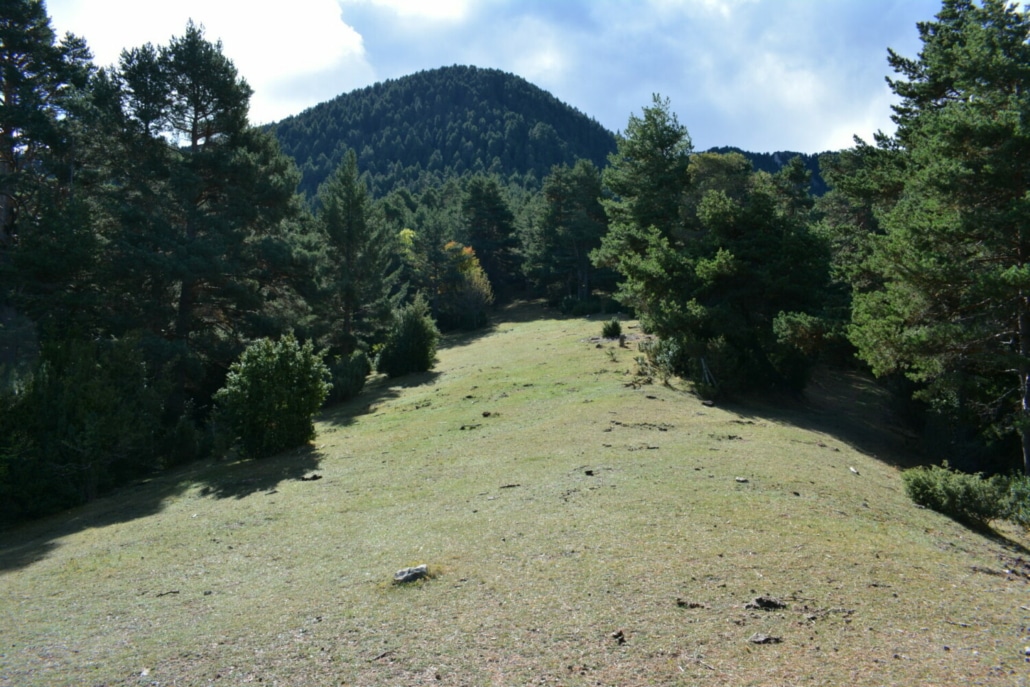
Fundació RESPIR was established at the initiative of the Serrahima family. The family owns the Santa Magdalena estate, a forested area of nearly 100 hectares located in Bellver de Cerdanya.
Active forest management has been carried out on the estate for many years. This includes wildfire prevention, extensive grazing and experimental cultivation.
However, the current context presents new challenges. Droughts and extreme weather events are becoming increasingly significant. At the same time, wildfire risk is rising in a predominantly privately owned and fragmented forest territory.
In this context, RESPIR aims to help connect research, innovation and forest management. The goal is to facilitate the transfer of scientific knowledge to the territory. In this way, it can be transformed into applicable solutions.
From the forest bioeconomy to a resilience strategy
The project started with a focus on the forest bioeconomy. During the support process, RETURN helped broaden this perspective. This led to the definition of a more distinctive positioning for the Foundation.
The proposal evolved towards a strategy to strengthen the forest resilience strategy in the face of climate change. This strategy is based on four pillars: applied research, innovation, knowledge transfer, and the creation of spaces for dialogue and critical thinking.
To define this proposal, reference initiatives and specialised documentation were analysed. Conversations were also held with different stakeholders in the territory.
In addition, a key moment was the meeting with the Centre de Ciència i Tecnologia Forestal de Catalunya (CTFC). This meeting helped define RESPIR’s potential as a space for research, innovation and knowledge transfer.
What did RETURN do?
RETURN’s work combined territorial knowledge, research, analysis and strategic planning. The goal was to define a forest resilience strategy with a solid and practical foundation.
- Territorial listening and immersion: meetings with the project’s initiators and local stakeholders. Visits were also made to Santa Magdalena and Cerdanya.
- Research and analysis: study of reference initiatives and the social, economic and natural context of Cerdanya.
- Conceptualisation: definition of RESPIR’s value proposition, mission, vision and values.
- Strategic design: definition of five strategic objectives. Three lines of action were also established: applied research and innovation; knowledge transfer and capacity building; and the development of value chains.
- 2026–2027 roadmap: prioritisation of actions, responsibilities, expenditure needs and potential funding sources.
A roadmap for forest resilience
The result is an actionable roadmap to launch the Foundation. At the same time, it helps consolidate its positioning and guide its initial activities.
The planned actions include defining the Santa Magdalena scientific testing ground. The roadmap also foresees establishing partnerships with research centres and universities.
In addition, it includes identifying stakeholders and private forest owners. Finally, it covers the preparation of the Foundation’s public launch.
The process has also made it possible to define several initiatives ready to be activated. These include Santa Magdalena as a demonstration case. Other initiatives include participation in Nexus Social de la UPC, the Annual Meeting of Private Forest Owners in Cerdanya, and historical research into Santa Magdalena.
A network for generating and transferring knowledge
RESPIR is positioned as a foundation focused on generating knowledge and turning it into action. Therefore, the proposal combines a testing ground for research and innovation with the dissemination and transfer of the solutions developed.
To make this possible, the project has identified a potential network of partnerships. This network includes research centres, universities, public administrations, local organisations and forest owners.
This capacity to connect different stakeholders is key to strengthening the resilience of the Pyrenees’ forests. The challenges associated with climate change require specialised knowledge and experimentation. At the same time, they require cooperation between different stakeholders.
A foundation for funding
The roadmap also includes an initial identification of public and private funding opportunities.
In this regard, one of the recommendations is to make the regular search for funding calls a structural function of the Foundation. This task should be aligned with its priorities and projects.
In this way, RESPIR will be able to anticipate opportunities and seek resources to develop its lines of action.
From strategy to action
Through this project, RETURN has helped Fundació RESPIR move from an initial idea to a concrete proposal. The project defines a positioning, objectives, lines of action and a 2026–2027 roadmap.
The next step is to activate the first partnerships. It will also be necessary to launch the Santa Magdalena testing ground.
From there, RESPIR will be able to develop projects that generate useful knowledge. The goal is to help strengthen the resilience of the Pyrenees’ forests in the face of climate change challenges.
Finally, RETURN has also supported the foundations ULLS del MON and TOT RAVAL in redesigning their strategic processes.


